ENV 1317–4 covers requirements for energy absorbing terminals, how they shall be tested and how their properties are to be described.
Speed class
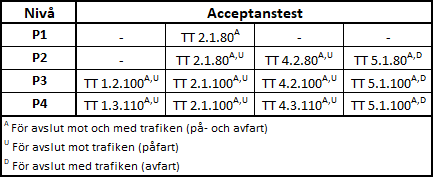
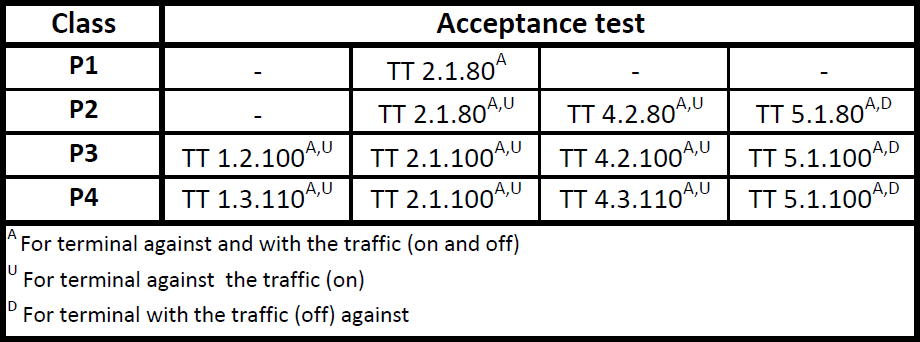
The energy absorbing terminals ability to stop an errant vehicle is described by its performance level.
Test
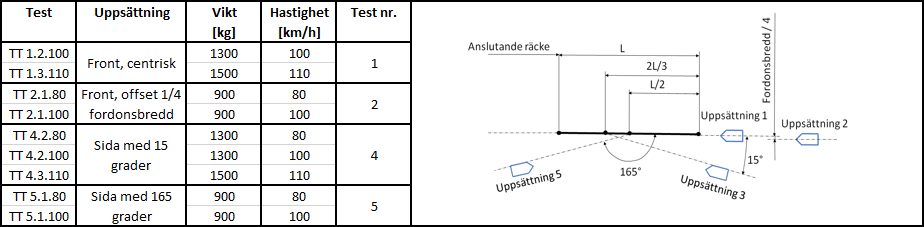
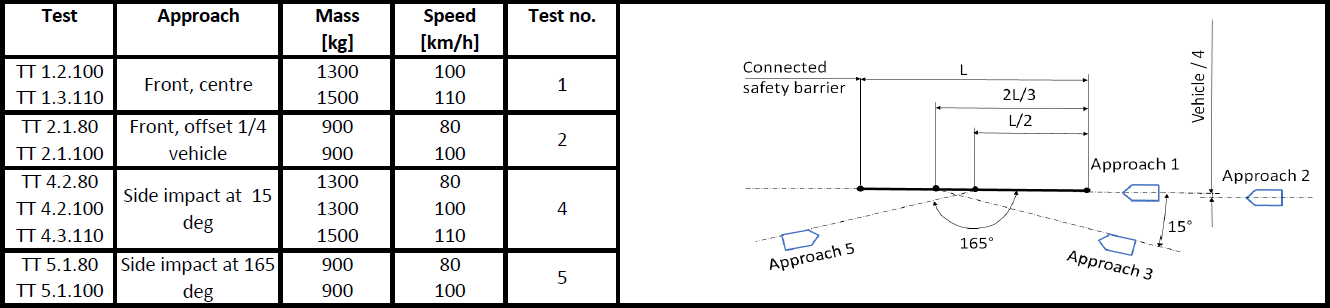
The standard defines 9 different tests for energy absorbing terminals. These are named TT (Test Terminal) followed by a three digit number. The first figure tells the approach (1, 2, 4 or 5), the second type of vehicle (1 – 900 kg car, 2 – 1300 kg car and 3 – 1500 kg car) and the third and last tells the test speed (50, 80, 100 or 110 km/h).
Example:
TT 1.2.100: TT (Test Terminal), Test 1,vehicle type 2 (car 1300 kg), 100 km/h
TT 1.3.110: TT (Test Terminal), Test 1, vehicle type 3 (car 1500 kg), 110 km/h
Impact severity level
The Impact severity level gives an assessment of how safe a terminal is for occupants in an impacting vehicle. There are two levels, A and B. Impact severity level A is the safest for occupants in an impacting vehicle.
Most energy absorbing terminals fulfil requirements for impact severity level B. In Sweden both impact severity lever A and B are accepted.


Class of lateral displacement
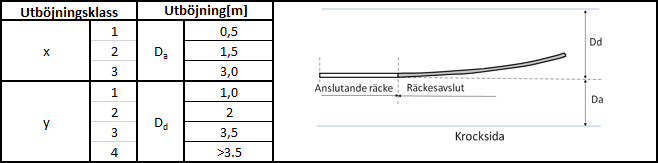
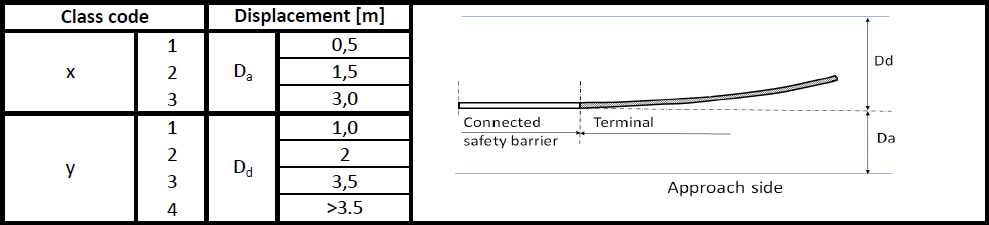
The permanent lateral displacement of the energy absorbing terminal shall be as shown in the table below.
In Sweden the class of lateral displacement shall be chosen in such a way that a deformed (impacted) terminal does not intrude on adjacent carriageways or covers more than the width of adjacent pedestrian/bicycle paths minus one meter.
- XXXXXXXXXXXXXXXX
- XXXXXXXXXXXXXXXXXXXX
Redirection zone class
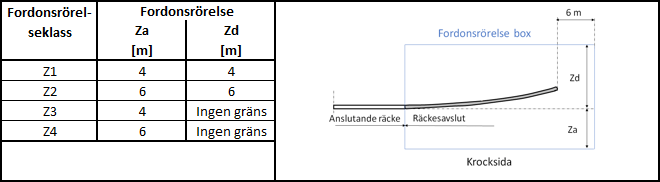
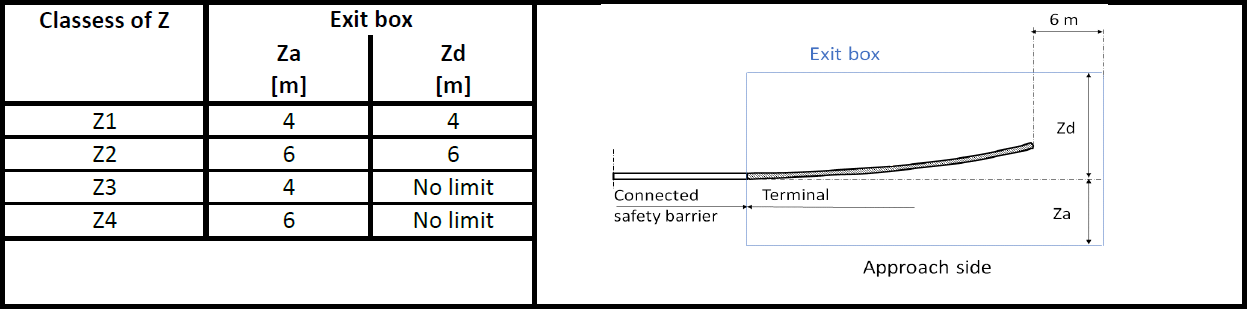
The redirection zone class describes how an impacting vehicle performs after colliding with the energy absorbing terminal.
In Sweden only redirection zone classes Z1 and Z2 are accepted without a special permit from the Swedish Transport Administration.